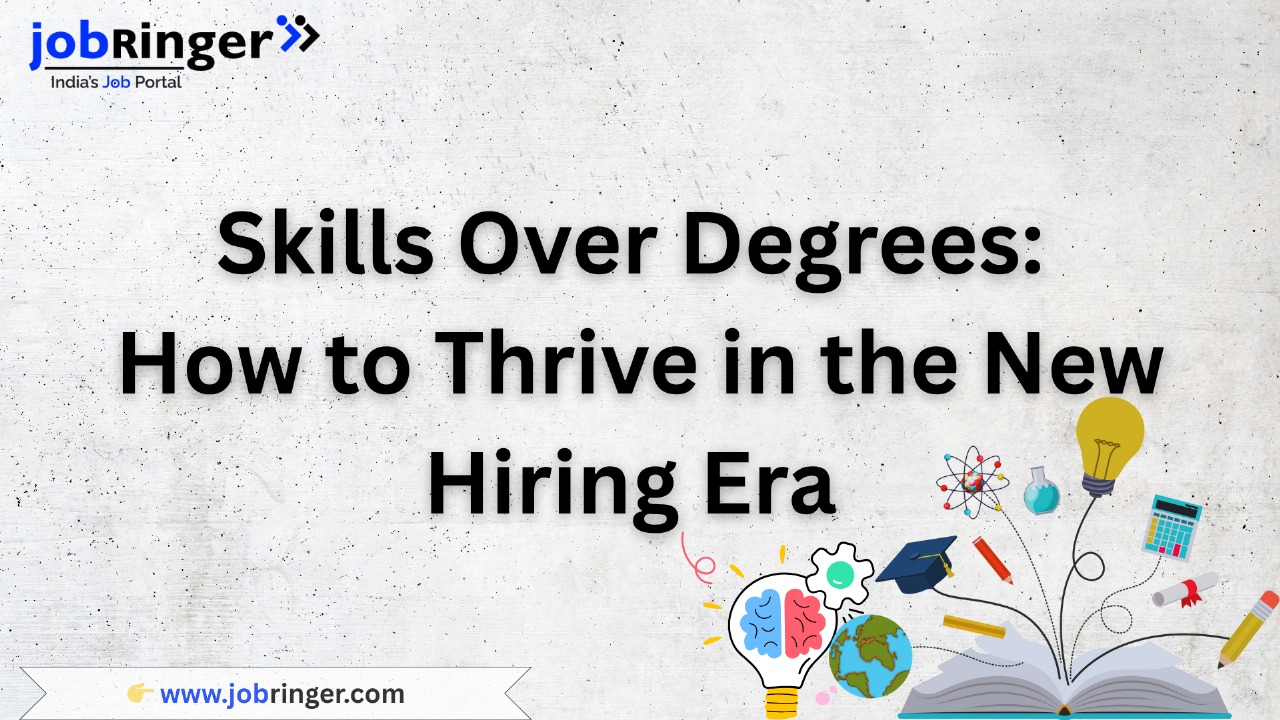
College degrees have been seen as the golden ticket for a successful career for decades. But now the times have changed. As the job market is evolving rapidly, employers no longer scan resumes for prestigious universities – they actively seek the skills, real, demonstrable hands-on abilities. Today, employers across industries—especially in technology, artificial intelligence, and cybersecurity—are prioritizing practical skills and real-world experience over traditional degrees. This trend illustrates the shift from skill-based hiring.
Why Skills Matter More Than Degrees
Due to rapid technological change, Industries are transforming at an unprecedented rate. The skills required for many positions are evolving more swiftly than traditional education systems can adapt. Employers are increasingly seeking candidates who can demonstrate practical expertise, problem-solving capabilities, and adaptability—qualities that are often more effectively cultivated through hands-on experience than through conventional classroom learning.
Skills-based hiring is dismantling barriers to employment. By prioritizing candidates' abilities over their educational backgrounds, companies are creating opportunities for self-taught professionals, bootcamp graduates, and individuals from non-traditional paths. This approach not only helps to bridge long-standing opportunity gaps but also fosters greater diversity and inclusion within the workforce.
Employers have reported that candidates hired based on their skills—rather than their degrees—exhibit higher levels of engagement, superior performance, and increased tenure with the organization. Recent surveys indicate that 89% of organizations that emphasize skills over degrees have experienced enhanced employee retention. Furthermore, skills-based hiring enables companies to fill positions more swiftly and with candidates who are a better fit for the specific requirements of the role.
What Employers Want
Forward-thinking employers are shifting their focus to competency-based evaluation. They're looking for candidates who can demonstrate specific skills through portfolios, work samples, and practical assessments rather than relying solely on transcripts and GPAs. This approach often reveals talent that traditional hiring methods might overlook.
Problem-solving ability has become paramount. Employers value candidates who can approach challenges creatively, think critically, and adapt their knowledge to new situations. These meta-skills often prove more valuable than domain-specific knowledge, which can become outdated quickly.
Communication and collaboration skills have gained importance as work becomes increasingly cross-functional and remote. The ability to explain complex ideas clearly, work effectively in teams, and navigate organizational dynamics often determines career success more than technical expertise alone.
A continuous learning mindset tops many employers' wish lists. In rapidly evolving industries, the willingness and ability to acquire new skills quickly often matter more than existing knowledge. Employers seek candidates who demonstrate curiosity, adaptability, and a track record of keeping their skills current.
What Job Seekers Need to Do
For those currently in traditional career paths, the transition to a skills-based approach requires thoughtful planning. Begin by conducting an honest assessment of your current capabilities and identifying gaps in your target field. Many professionals discover they have more transferable skills than they initially realized.
Invest in strategic skill development through a combination of formal courses, self-directed learning, and practical application. The key is choosing learning opportunities that provide both knowledge and the ability to demonstrate that knowledge through projects or certifications.
Network strategically within your target industry or role. Attend meetups, join online communities, and engage with professionals who are already working in your desired field. These connections can provide insights into which skills are most valued and may lead to opportunities to demonstrate your capabilities.
Consider taking on side projects or volunteer work that allows you to practice new skills in real-world contexts. This approach provides valuable experience while building a portfolio of work you can showcase to potential employers.
Embracing the New Paradigm
The skills-over-degrees movement doesn't diminish the value of education—it expands the definition of what counts as meaningful learning. Formal education remains valuable for developing critical thinking, research skills, and broad knowledge bases. However, it's no longer the only path to professional success.
This shift creates opportunities for people who may have been excluded from traditional career paths due to circumstances beyond their control. It also rewards initiative, creativity, and the willingness to take ownership of one's professional development.
The professionals who will thrive in this new era are those who embrace lifelong learning, focus on developing demonstrable skills, and can articulate their value through concrete examples and results. They understand that in a rapidly changing economy, adaptability and proven capability matter more than where they went to school.
The future belongs to those who can do the work, solve the problems, and deliver the results, regardless of how they acquired their abilities. By focusing on skills over credentials, both individuals and organizations can unlock potential that traditional hiring methods might miss, creating a more inclusive and effective talent ecosystem for everyone involved.
In the new hiring era, your skills are your currency. The piece of paper on your wall matters less than the value you can bring to the table. So, whether you're a recent graduate, a career changer, or someone re-entering the workforce, focus on what you can do, not just where you've been. Because the future doesn’t belong to the most educated — it belongs to the most capable.
JobRinger is more than just a job portal — it's your smart career companion in today’s fast-paced world. Powered by advanced AI technology, it helps job seekers discover the right roles — from full-time and part-time to freelance, remote, and hybrid opportunities — all tailored to their skills and goals. For employers, it’s a one-stop hiring solution that finds the best-fit talent with speed and precision. JobRinger empowers professionals at every stage — whether you're just starting, making a switch, or returning after a break. Whether you're looking to hire or get hired, JobRinger.com is here to make your journey smoother, smarter, and more successful.