Written by Heena Thakur, SEO & AEO Specialist & Researcher at JobRinger
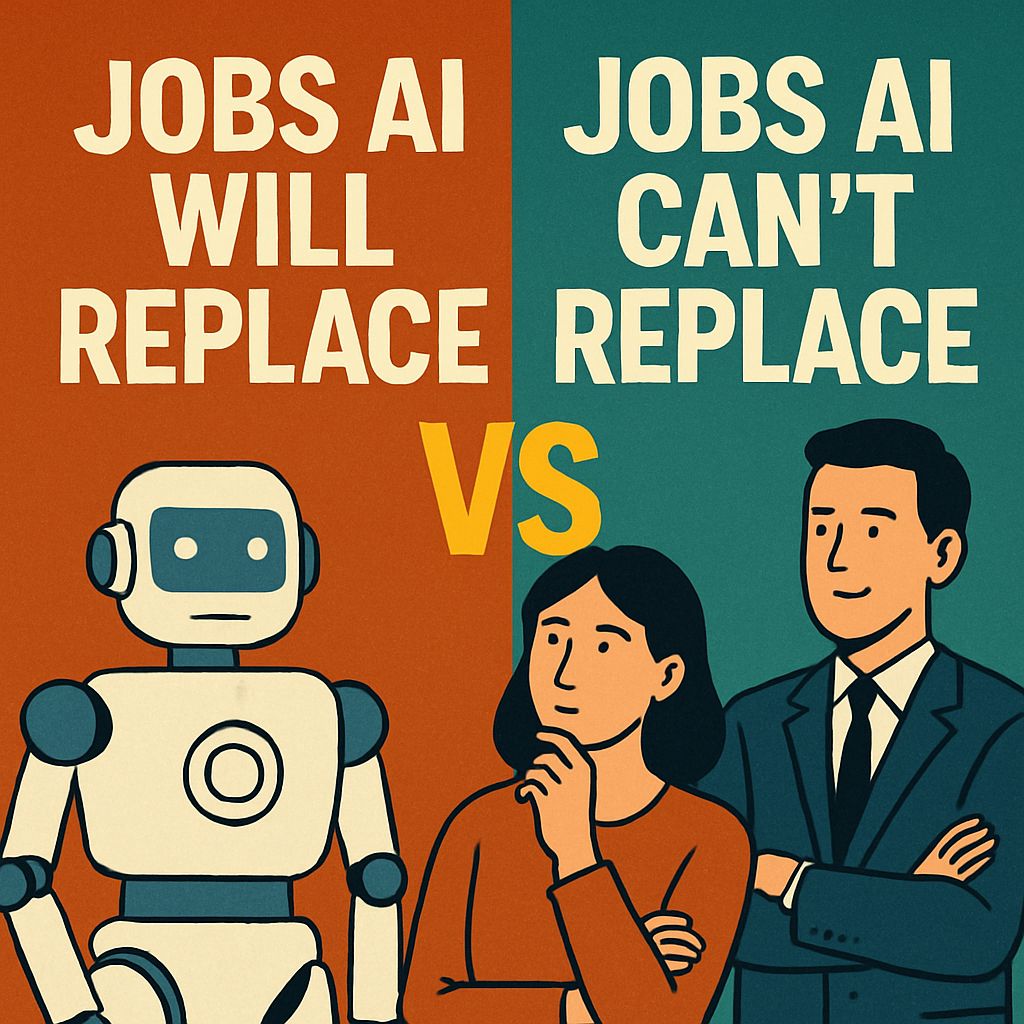
In an era where artificial intelligence (AI) is rapidly evolving, the conversation surrounding its impact on the job market has become increasingly relevant. This blog explores the dichotomy of jobs that AI is poised to replace versus those it cannot, shedding light on the reality behind the hype. Understanding this landscape is crucial for both employees and employers as they navigate the future of work.
AI's presence isn’t new – its roots stretch back to the mid-20th century. But in recent years, explosive advancements in machine learning and automation have rekindled a global dialogue on how it will influence hiring and workforce development.
The Rise of AI: A Brief Overview
AI has been part of our technological evolution for decades. However, recent breakthroughs in large language models, predictive analytics, and real-time data processing have dramatically expanded its capabilities.
According to the World Economic Forum's Future of Jobs Report 2020, AI and automation could displace 85 million jobs by 2025 – but also create 97 million new ones. The key takeaway: AI doesn’t just eliminate roles; it transforms them.
1. Jobs AI Will Likely Replace
AI is most effective at replacing repetitive, rules-based tasks. Roles that rely heavily on structured data and don’t require high emotional intelligence or complex decision-making are at highest risk.
Examples of At-Risk Jobs:
- Data Entry Clerks: AI excels at fast and error-free data handling.
- Telemarketers: Chatbots and voice assistants now handle high-volume, scripted calls.
- Assembly Line Workers: Robotics and machine vision systems are widely adopted in manufacturing.
- Basic Accounting & Bookkeeping: Automated tools like QuickBooks and Xero reduce manual processing.
As highlighted in a McKinsey & Company report, nearly half of all work activities globally could be automated using current technologies.
2. The Impact on Creative Professions
There’s a myth that AI will wipe out creative jobs. In reality, it is becoming a creative collaborator rather than a replacement.
What's Changing:
- Graphic Designers use AI tools like Canva Magic or Adobe Firefly to streamline design ideation.
- Content Creators leverage AI for brainstorming or drafting, but final storytelling remains human-led.
- Musicians & Writers use AI to compose drafts or scores, yet emotional depth is human-made.
Harvard Business Review states that AI enhances creativity by reducing friction in the creation process but does not generate truly original thought.
3. Healthcare: A Sector of Collaboration
In healthcare, AI is not replacing doctors – it’s amplifying their accuracy and decision-making.
How AI Helps (Not Replaces):
- Diagnostics: Tools like IBM Watson help detect early cancer signs.
- Patient Monitoring: Wearables and AI-driven platforms track patient vitals in real-time.
- Administrative Automation: Reduces the workload of nurses and admins.
But empathy, ethical judgment, and bedside manner remain irreplaceable.
According to Brookings Institution, AI is best seen as a co-pilot in healthcare, supporting but not supplanting human professionals.
4. The Role of Emotional Intelligence
Jobs requiring empathy, human connection, and nuanced judgment are the least susceptible to AI disruption.
AI-Resilient Careers:
- Therapists & Psychologists
- Educators & Special Needs Teachers
- Social Workers
- Customer Success Managers
These roles rely on human intuition and deep listening, which AI cannot replicate effectively.
Pew Research Center notes that jobs with high social or emotional skill demands are growing rapidly and remain mostly immune to automation.
5. The Future of Work: Adapting to Change
As AI reshapes industries, the human workforce must evolve alongside it. This means upskilling, reskilling, and adopting lifelong learning habits.
Steps to Future-Proof Your Career:
- Embrace AI Tools: Learn to use AI in your current role.
- Focus on Human-Centric Skills: Creativity, emotional intelligence, problem-solving.
- Seek Hybrid Roles: Combine human strengths with tech tools (e.g., AI-assisted marketing analyst).
"At JobRinger, we've seen an uptick in companies seeking candidates who understand AI tools but also possess strong interpersonal and leadership skills," shares Heena Thakur, our in-house SEO specialist and hiring researcher.
Conclusion
The impact of AI on jobs is complex and evolving. While automation will continue to transform certain sectors, many professions will remain safe due to their reliance on human judgment, creativity, and emotional depth.
The future of work isn't man vs machine – it's man with machine. Embracing this collaboration is key to thriving in the AI-powered world.